


Homework Meltdowns Aren’t About the Homework
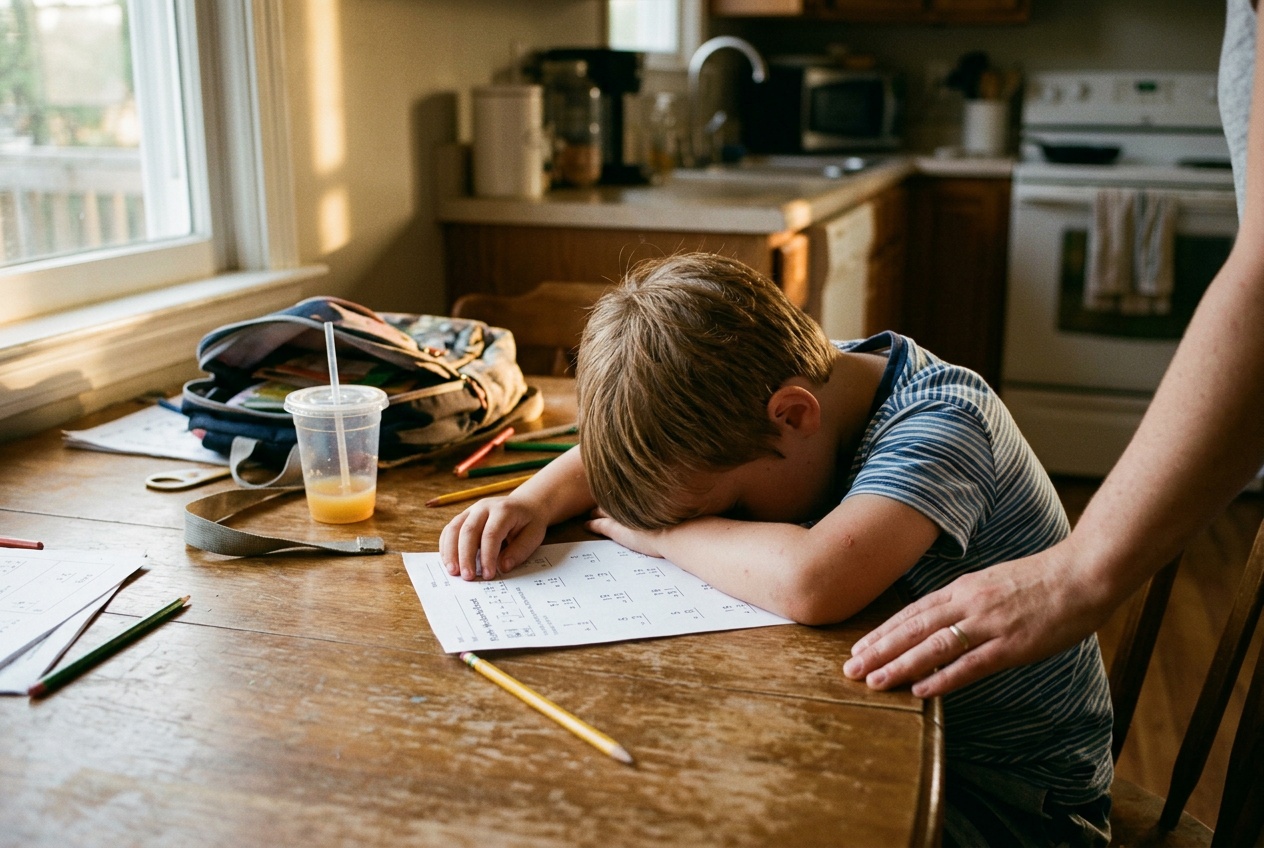
It’s 6:45 on a Tuesday and your kid is face-down on the kitchen table, sobbing over a worksheet with eight math problems on it. Eight. You’ve tried bribing, you’ve tried the calm voice, you’ve tried threatening to take away the tablet. Nothing’s working. If you’ve been here, you already know homework meltdowns rarely have anything to do with the actual homework.
I’ve talked to enough teachers and child psychologists over the years to know this pattern is almost universal. The worksheet is just the trigger. What’s underneath it is usually exhaustion, embarrassment, or a mismatch between how your child learns and how the assignment was designed. Once you start looking at homework meltdowns through that lens, the whole evening changes.
What’s Actually Going On Under the Tears
Kids have spent six or seven hours holding it together at school — sitting still, following instructions, managing friendships, maybe masking a learning difference nobody’s caught yet. By the time they get home, their tank is empty. Homework lands right in that empty tank.
Some of the most common hidden culprits behind homework meltdowns:
- Undiagnosed processing struggles, like dyslexia or ADHD, that make a “simple” assignment feel like climbing a wall
- Perfectionism — the fear of getting it wrong is bigger than the actual difficulty of the work
- Sensory overload from a long day, meaning the nervous system is done before the pencil even touches paper
- A skills gap the teacher doesn’t know about yet, so the homework is genuinely above where the child currently is
None of these mean your kid is being dramatic or difficult. They mean something needs to shift — either the approach at home, or a conversation with the teacher.
What Actually Helps in the Moment
When you’re in the middle of a meltdown, logic doesn’t land. A regulated nervous system has to come first. Here’s what tends to work better than pushing through:
- Stop and offer a snack or a ten-minute break before anything else — hungry, tired brains cannot problem-solve
- Get down to eye level and name what you’re seeing: “This looks really hard right now” lands better than “You just need to focus”
- Break the assignment into chunks smaller than what’s printed on the page — three problems, then a check-in, not eight all at once
- Skip the hardest problem first and start with one they can actually do, to rebuild a little confidence before tackling the tough one
I’ve watched this play out with my own nephew, who used to melt down every single night over reading logs. Turned out the font size in his book was straining his eyes by page two. Nobody thought to ask. A bigger-print copy from the library fixed more than any pep talk ever did.
Editor’s Note – For young children keeping up with the ever increasing demands of growing up and have responsibilities like homework can be overwhelming. Stopping the meltdown before it starts and gets worse is always the best practice. I like to use a little parenting trick that I call the “Stop, Look, and Listen” method to preventing a meltdown.
- STOP – From the very moment you start to see or sense that parenting inkling that your child is starting to get overwhelmed and frustration, or anxiety you must STOP and freeze the momentum of that meltdown. Try to repostion the situation to stop your child, get them to take a breath get their mind off of that anxiety and stress so that they can refocus their thoughts.
- LOOK – Try to shift yourself into the role of an objective observer. Scan your childs physical body and their immediate surroundings. Look them over closely – their physical body will tell you signs of what might be bothering them or even their surroundings can alert you to what might be the issue. Is the area you both are in loud and chaotic? Is there any or alot of visual clutter that might be making it hard to concentrate on the tasks at hand? All of these and more can really contribute to a meltdown fast.
- LISTEN – Turn on and Tune into your child’s behavioral dialogue. Their meltdown could simple be due to being overwhelmed with their surroundings, maybe they need a drink of water, or even the simple task of turning the lights down so that they’re not to bright can sometimes help a great deal. You as the parent needs to listen to what your child’s meltdown behavior is screaming about. Stop yourself, as the parewnt and ditch the logic, close your mouth (stop talking,) and spend a moment or two just listening to the emotional tone of your child’s meltdown rather than the screaming words.
Building a System That Prevents the Meltdown Before It Starts
Reactive strategies matter, but the bigger win is setting up the after-school hours so homework meltdowns have less room to happen in the first place.
- Build in a real buffer between school pickup and homework time — even fifteen minutes of nothing structured helps kids decompress
- Keep homework in the same spot and same rough time window every day, so it’s not a fresh negotiation each afternoon
- Watch for patterns — if meltdowns cluster around one subject, that’s data worth bringing to the teacher, not just a mood you’re managing at home
- Ask the teacher directly what a “reasonable” amount of struggle looks like for this assignment, so you know when it’s actually too hard versus just uncomfortable
When It’s Time to Loop in the School
If homework meltdowns are happening most nights, for weeks on end, that’s not a discipline problem — that’s information. Email the teacher. Ask specifically: is my child able to do this independently in class, or are they struggling there too? That one question tells you a lot. If the answer is “they’re struggling in class as well,” it’s worth asking about an evaluation for learning differences or attention issues. Catching it early changes the whole trajectory, and it takes the blame off your kid’s shoulders — and yours.
Tonight, if the meltdown starts before the pencil even comes out, try closing the book for ten minutes first. The math problems will still be there. Your kid’s ability to actually think clearly might not be, until they get a minute to breathe.