


In the domain of industrial air pollution control, thermal oxidation technologies serve as essential tools for destroying volatile organic compounds (VOCs), hazardous air pollutants (HAPs), and odorous emissions. Two primary systems in this category are the Regenerative Thermal Oxidizer (RTO) and the standard Thermal Oxidizer, often referred to as Direct Fired Thermal Oxidizer (DFTO) or Recuperative Thermal Oxidizer. Both employ high-temperature oxidation to convert harmful gases into innocuous byproducts such as carbon dioxide and water vapour, but they diverge substantially in design, energy efficiency, operational costs, and suitability for various applications.

Thermal oxidisers have been utilised since the mid-20th century to address emission challenges in sectors like petrochemicals, printing, coating, pharmaceuticals, and food processing. The fundamental principle involves heating exhaust gases to temperatures between 700°C and 1100°C, where molecular bonds are broken, facilitating complete combustion. However, escalating energy costs and stringent environmental regulations have propelled the development of more efficient variants, such as RTOs. This comparison delves into the key distinctions, advantages, disadvantages, and practical considerations between RTOs and traditional thermal oxidisers, aiding facilities in selecting the most appropriate solution for their specific needs.
Types of Thermal Oxidizers and Their Basic Mechanisms
Thermal oxidisers can be broadly categorised into direct fired (DFTO), recuperative, and regenerative types. A standard Thermal Oxidizer, particularly the DFTO, functions by directly injecting the exhaust gas into a combustion chamber where a burner supplies the necessary heat for oxidation. The process is relatively straightforward: contaminated air is mixed with fuel and oxygen, ignited, and the pollutants are destroyed through thermal decomposition. DFTOs are effective for streams with high pollutant concentrations but suffer from substantial fuel consumption, as most of the generated heat is lost with the exhaust gas, typically achieving thermal efficiencies below 60% even when equipped with basic recuperative heat exchangers.
Recuperative Thermal Oxidizers enhance the basic DFTO design by incorporating a heat exchanger—usually a shell-and-tube type—to preheat the incoming waste gas using heat from the outgoing clean gas. This can boost efficiency to 50–80%, reducing auxiliary fuel needs. However, the heat recovery is limited by the exchanger’s surface area and material constraints, making it suitable for moderate-flow applications where some energy savings are desired without excessive complexity.
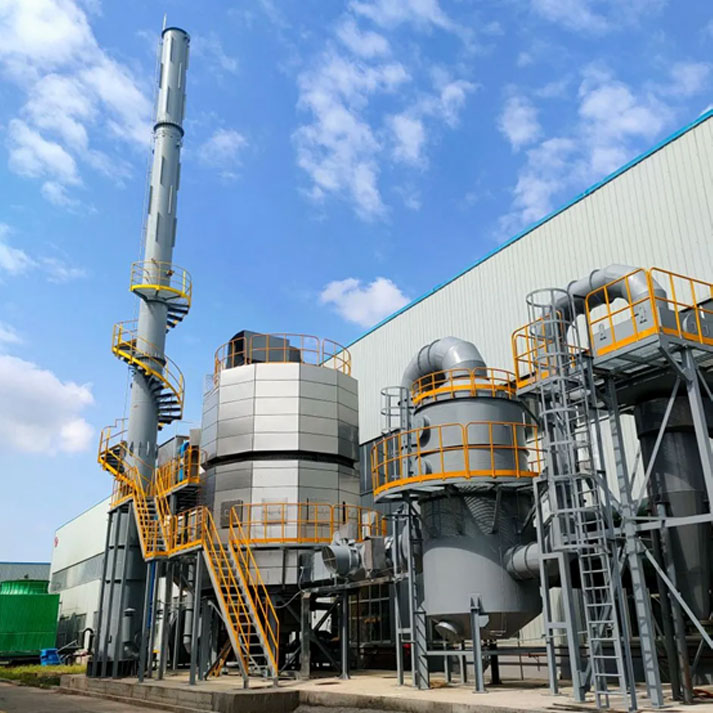
In contrast, a Regenerative Thermal Oxidizer improves upon these designs with a regenerative heat recovery system. RTOs utilize ceramic media beds to capture and reuse heat from the cleaned exhaust gas, preheating the incoming polluted gas. This cyclic heat exchange allows RTOs to recover 95–97% of the thermal energy, substantially lowering supplemental fuel requirements. Third-generation rotary valve RTOs further advance this by employing a continuously rotating valve to manage flow across multiple chambers (typically 12–24), eliminating the pressure spikes and mechanical wear associated with older poppet valve systems.

The core difference lies in energy management and system complexity: while both achieve destruction efficiencies exceeding 99% for most VOCs, RTOs are far more sustainable for continuous, high-volume operations, whereas standard thermal oxidisers may suffice for intermittent or high-concentration streams where simplicity is prioritised.
Detailed Comparison: RTO vs Thermal Oxidizer
To provide a clear perspective, the following table outlines key parameters based on industry standards and performance data:
| Parameter | Regenerative Thermal Oxidizer (RTO) | Standard Thermal Oxidizer (DFTO/Recuperative) | Key Difference |
| Heat Recovery Efficiency | 95–97% (regenerative ceramic beds) | <60% (DFTO) or 50–80% (recuperative exchanger) | RTO minimises fuel use through superior regeneration |
| Operating Temperature | 815–980°C | 700–1100°C | Similar, but RTO optimises for efficiency |
| Destruction Efficiency | >99.5% (with purge cycles) | 95–99% | RTO reduces bypass through advanced valve designs |
| Energy Consumption | Low (autothermal at >3% LEL) | High (constant fuel input) | RTO saves 30–50% on operating costs |
| Capital Cost | Higher (due to media and valves) | Lower (simpler construction) | RTO offset by long-term savings |
| Footprint | Compact (multi-chamber integration) | Larger (especially recuperative) | RTO more space-efficient |
| Suitable Applications | High-volume, low-concentration | High-concentration, intermittent | RTO for continuous processes |
| Maintenance Requirements | Medium (valve and media checks) | Low (basic burner maintenance) | RTO has more components but longer intervals |
| NOx Formation | Low (controlled combustion) | Higher (direct flame) | RTO uses low-NOx burners |
| Self-Sustaining Capability | High (at 3–10% LEL) | Limited | RTO often operates without auxiliary fuel |
RTOs excel in scenarios with steady exhaust flows and lower pollutant concentrations, while standard thermal oxidisers are better suited for smaller, high-calorific streams where initial cost is a primary concern.

Advantages of RTO over Traditional Thermal Oxidizer
The primary advantage of RTOs is their superior energy efficiency, achieved through regenerative ceramic beds that cycle heat between inlet and outlet streams. This results in fuel savings of 30–50% or more compared to DFTOs, which lose most heat through the stack, or recuperative oxidisers limited by exchanger efficiency. For instance, in applications with exhaust flows exceeding 10,000 scfm and VOC concentrations below 10% LEL, RTOs can operate autothermally, using the heat from pollutant oxidation to sustain the process without additional fuel.
RTOs also feature lower operating temperatures in optimised designs, reducing NOx formation—a common issue in DFTOs where direct flame combustion can produce high NOx levels. The multi-chamber configuration in RTOs includes purge cycles that minimise untreated gas bypass, achieving destruction rates >99.5%, whereas standard thermal oxidisers may require additional controls to reach similar levels. Additionally, RTOs handle a broader range of gas volumes and concentrations with greater stability, thanks to advanced valve systems that eliminate mechanical shock and pressure fluctuations.
While capital costs for RTOs are 20–50% higher due to ceramic media and complex valving, the return on investment is typically realised within 3–5 years through reduced fuel expenses and lower maintenance needs over time. In high-volume operations, the compact footprint of RTOs—often 35–65% smaller than equivalent thermal oxidisers—further reduces installation costs and space requirements.
Disadvantages and Limitations
Despite their advantages, RTOs have some drawbacks compared to simpler thermal oxidisers. The increased complexity of RTOs, with multiple chambers and valve systems, can lead to higher initial maintenance learning curves, though modern rotary valve designs mitigate this with >10-year valve lifespans. RTOs may also experience “puff” emissions during valve switching in older poppet valve models, though third-generation rotary valves reduce this to negligible levels.
Standard thermal oxidisers, particularly DFTOs, offer simplicity and lower upfront costs but at the expense of higher ongoing fuel consumption, making them less suitable for energy-sensitive applications. Recuperative variants bridge this gap somewhat but cannot match RTOs’ 95–97% efficiency. For streams with very high particulate or condensing matter, both systems may require pre-treatment, but RTOs are more susceptible to media fouling without proper filtration.
Applications and Case Studies
RTOs are ideally suited for industries with large, dilute exhaust streams, such as printing (solvent emissions), coating (paint fumes), petrochemicals (benzene/toluene vents), and pharmaceuticals (solvent recovery). A case study from a petrochemical plant demonstrated an RTO achieving 99.8% destruction efficiency for benzene-laden streams at 100,000 m³/h, with 96% heat recovery, reducing annual fuel costs by over 40%.
Standard thermal oxidisers excel in applications with high-concentration, intermittent flows, such as waste incineration or flare replacement in oil and gas. For example, a refinery using a DFTO for high-HAP streams achieved reliable operation but with higher energy input compared to an equivalent RTO setup.
In food processing, RTOs handle odorous emissions like H2S from fish meal lines, while thermal oxidisers may be used for smaller, concentrated odour sources.

Environmental and Regulatory Considerations
Both systems contribute to environmental protection by destroying VOCs and HAPs, but RTOs offer superior sustainability through reduced fuel use and lower greenhouse gas emissions. RTOs align with regulations like the EU Industrial Emissions Directive (IED) and US EPA Maximum Achievable Control Technology (MACT) standards, often qualifying as Best Available Techniques (BAT) due to their high efficiency.
Standard thermal oxidisers comply with similar standards but may require add-ons like low-NOx burners to meet NOx limits. In regions with strict energy efficiency mandates, RTOs provide a clearer path to compliance while minimising secondary emissions.
Cost Analysis and Economic Viability
Capital costs for RTOs range from $200,000–$5,000,000 depending on size (10,000–200,000 scfm), with operating costs as low as $0.50–$2.00 per 1,000 scfm due to high heat recovery. Standard thermal oxidisers cost $100,000–$2,000,000 but have operating expenses of $2–$5 per 1,000 scfm from higher fuel use.
EPA data indicates RTOs have higher upfront costs (e.g., $25 million for large units) but lower annualised costs through fuel savings. For a 50,000 scfm system, an RTO might save $500,000 annually in fuel compared to a DFTO, yielding ROI in 3–4 years.
Future Trends in Thermal Oxidation Technology
Emerging trends include integration with carbon capture systems for RTOs, leveraging their concentrated CO2 output for sequestration. AI-driven controls will optimise valve timing and burner modulation, further reducing energy use. Hybrid systems combining RTO efficiency with catalytic elements for low-temperature operation are also developing, though traditional thermal oxidisers may see enhancements in low-NOx designs.
Recommended Supplier: SSJ UK Limited

SSJ UK Limited manufactures both regenerative thermal oxidisers and standard thermal oxidisers, providing tailored solutions for diverse industrial needs. Their third-generation rotary valve RTOs deliver unmatched 97% heat recovery and >99.5% destruction efficiency, while their DFTOs offer cost-effective simplicity for high-concentration applications. With over 68 patents and global installations, SSJ ensures reliability, compliance, and optimal performance through comprehensive design, installation, and support services.