

Last updated: November 27, 2026
Quick answer: Toddlers can put toys away and help wipe spills, preschoolers can make their bed and set napkins, school-age kids can load the dishwasher and fold laundry, and tweens can vacuum and help cook. Start with two or three jobs, show your child how to do each one, put them on a visible weekly chart, and attach chores to daily routines so they become habit.

Why should kids do chores?
Chores teach kids that they are a useful part of the family. They also build practical skills, responsibility and follow-through. The American Academy of Pediatrics’ HealthyChildren.org encourages giving children age-appropriate jobs around the house as part of growing independence.
Chores do not need to be perfect. A lumpy bed made by a 5-year-old is a win.
What chores are right for each age?
| Age | Chore ideas |
|---|---|
| 2 to 3 | Put toys in a bin, put clothes in the hamper, wipe spills with a cloth, help carry groceries (light items), help feed a pet with an adult |
| 4 to 5 | Make bed (pull up covers), set napkins and spoons, water plants, match socks, clear their own plate |
| 6 to 7 | Sort laundry by color, put away clean clothes, dust, set the table, pack their own backpack |
| 8 to 9 | Load and unload the dishwasher, fold laundry, sweep, take out trash and recycling, help make lunches |
| 10 to 12 | Vacuum, clean the bathroom sink and mirror, help cook simple meals with supervision, do a small load of laundry |
Every child is different. Use the list as a starting point, and match jobs to your child’s skills and attention span.
How do you make a chore chart that actually works?
- Pick two or three jobs to start. Add more once those are routine.
- Teach each job first. Do it together, then let them do it while you watch, then let them try alone.
- Make it visible. Put the chart on the fridge or by the door, at kid eye level.
- Use pictures for non-readers. A simple drawing of a toothbrush or a bed works.
- Attach chores to routines. Clear your plate after dinner. Hang up your coat when you get home. Routines do the reminding for you.
- Check off together. A quick end-of-day check gives kids a sense of finishing.
- Review weekly. Rotate jobs, add new ones and celebrate the streak.
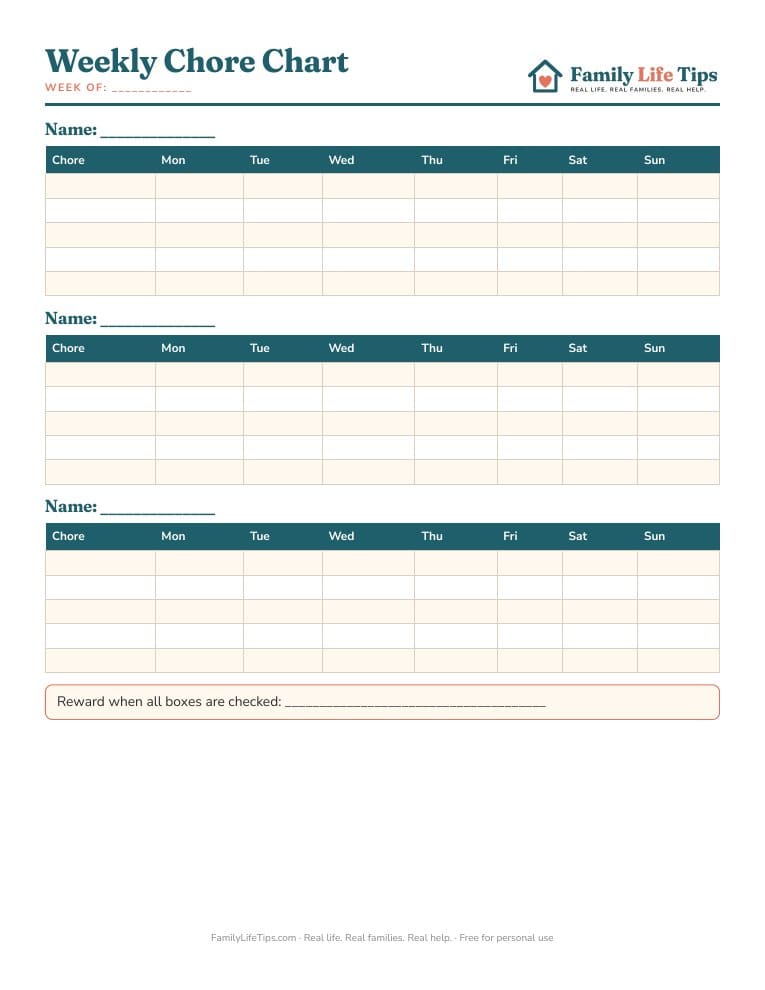
Free printable: Weekly Kids Chore Chart
A colorful weekly chart with room for each child’s jobs and a check box for every day. Print one per kid.
Should you pay kids for chores?
There is no single right answer. Many families use a mix:
- Family jobs (unpaid): Everyday chores like making beds and clearing plates, because everyone helps the home run.
- Extra jobs (paid): Bigger tasks like washing the car or raking leaves, which can earn a small amount.
Paid extra jobs are a great way to start talking about saving and spending. Our family budget guide has age-by-age money jobs for kids.
How do you get kids to do chores without nagging?
- Give a heads-up. “In five minutes, it’s toy pickup time.”
- Use a timer or a song. Racing a 5-minute timer turns pickup into a game.
- Praise the effort. “You put every block away. That was a big job.”
- Keep it short. Young kids do best with jobs that take 5 to 10 minutes.
- Do it alongside them. Folding laundry together is also a good time to talk.
What safety rules matter for kids’ chores?
Keep cleaning products locked up and out of reach, and use plain water or a damp cloth for little helpers. Knives, the stove and power tools need close adult supervision until kids are older. When kids help unload the dishwasher, give them the plastic and unbreakable items first.
For more on daily rhythm, see our time-saving tips for working parents and how to get the family home organized.
How do you split chores between siblings fairly?
Fair does not always mean identical. Older kids can handle bigger jobs, while younger kids get smaller ones. A few ways to keep the peace:
- Rotate weekly. Swap jobs every Sunday so nobody is always stuck with trash duty.
- Pair up. An older sibling can “teach” a younger one a job, which builds skills for both.
- Use one chart per child. Separate charts make it clear who is responsible for what.
- Do a family reset. Ten minutes of everyone tidying at the same time feels like teamwork, not punishment.
What should you do when a child refuses to do chores?
Stay calm and keep it simple. Restate the job, offer a small choice (“Do you want to do it before or after your snack?”), and follow through with a natural consequence, like starting screen time after the job is done. Avoid redoing a job in front of your child; if it is not quite right, show them one thing to fix next time. Consistency over a few weeks matters more than any single day.
What rewards work for chores?
Many kids respond well to small, non-food rewards: choosing the family movie, an extra bedtime story, a sticker toward a weekend outing, or extra time with a parent. As habits form, you can phase out rewards for everyday jobs and save them for extra tasks.
Sources
- HealthyChildren.org (American Academy of Pediatrics)
- Poison Help (Health Resources and Services Administration): poison prevention
Frequently asked questions
What chores can a 3-year-old do?
Simple one-step jobs like putting toys in a bin, putting dirty clothes in the hamper, wiping up small spills and helping feed a pet with an adult.
How many chores should a child have?
Start with two or three daily jobs for young kids and add more as they grow. A few chores done consistently teach more than a long list that never gets finished.
Should kids get paid for chores?
Many families keep everyday chores unpaid because everyone helps the household, and pay a small amount for extra jobs. Choose the approach that fits your family and stay consistent.
How do I get my child to do chores without nagging?
Use a visible chart, keep jobs short, show them how to do it first, praise effort and attach chores to routines, like clearing your plate after dinner.
What chores can a 10-year-old do?
Most 10-year-olds can load the dishwasher, fold and put away laundry, vacuum, take out trash and recycling, and help make simple meals with supervision.