

Last updated: November 27, 2026
Quick answer: About two weeks before school, check the school calendar and supply list, finish forms and health records, and start shifting bedtime earlier. One week out, shop for supplies and clothes, set up a homework spot and practice the morning routine. The night before, pack the backpack, lay out clothes and make lunch. A printable checklist keeps everyone on track.
What should parents do two weeks before school starts?
- Check the school calendar. Note the first day, early release days, open house and picture day.
- Get the supply list. Most schools post lists by grade on their website.
- Finish forms and records. Emergency contacts, health forms, medication forms and any required immunization records.
- Book checkups if needed. Sports physicals and well-child visits fill up fast before school starts.
- Start the sleep shift. Move bedtime and wake-up earlier by about 15 minutes every few days.
What should parents do one week before school?
- Shop for supplies and clothes. Check what still fits and what supplies you already have.
- Set up a homework spot. Good light, a flat surface and a bin of supplies. See our guide to setting up a learning space at home.
- Plan lunches and breakfasts. Add school lunches to your weekly meal plan.
- Practice the route. Walk, drive or ride the route to school or the bus stop.
- Do a practice morning. Wake up, get dressed and eat breakfast on the school schedule once or twice.
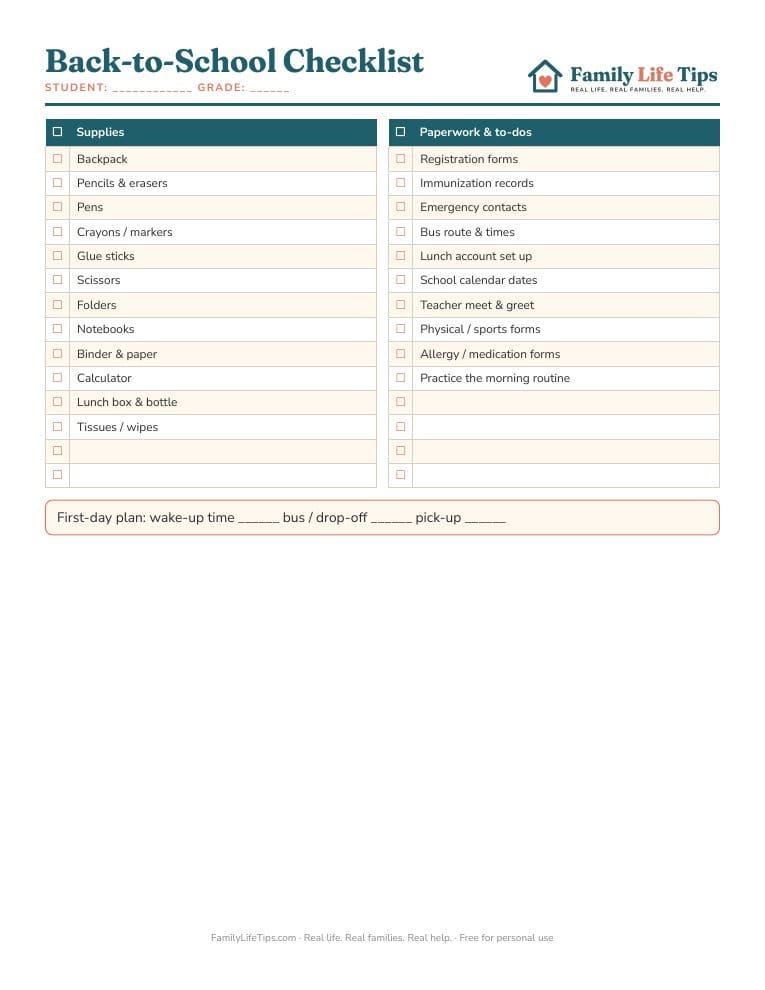
Free printable: Back-to-School Checklist
A week-by-week checklist for supplies, forms, routines and the first day, with a space to note teacher names and important dates.
How much sleep do kids need during the school year?
The American Academy of Pediatrics supports sleep guidelines from the American Academy of Sleep Medicine:
| Age | Recommended sleep (every 24 hours) |
|---|---|
| 3 to 5 years | 10 to 13 hours, including naps |
| 6 to 12 years | 9 to 12 hours |
| 13 to 18 years | 8 to 10 hours |
A calm, predictable bedtime routine helps. Our bedtime routine guide and free audio bedtime stories make winding down easier.
How do you choose a safe backpack?
The AAP recommends that a backpack weigh no more than 10 to 20 percent of a child’s body weight. Look for wide, padded shoulder straps and a padded back. Teach kids to use both straps, pack heavier items closest to the back and only carry what they need that day.
How do you make school mornings easier?
- Prep the night before. Pack backpacks, set out clothes (shoes too), make lunches and sign forms.
- Use a launch pad. One spot by the door for backpacks, coats and shoes.
- Give kids a picture checklist. Dress, breakfast, teeth, shoes, backpack.
- Build in 10 extra minutes. It covers the lost shoe and the forgotten permission slip.
- Keep screens off until everyone is ready.
For more on busy weekdays, read our time-saving tips for working parents, or give kids a small morning job with our chore chart guide.
What school supplies do kids usually need?
Lists vary by school and grade, so always check yours first. Common items include:
| Grade | Typical supplies |
|---|---|
| Pre-K and K | Crayons, glue sticks, safety scissors, washable markers, a folder, tissues |
| Grades 1 to 3 | Pencils, erasers, crayons, colored pencils, glue sticks, folders, a pencil box |
| Grades 4 to 6 | Pencils, pens, highlighters, notebooks, binder and dividers, a ruler, a basic calculator |
Before buying, go through last year’s supplies. Crayons, scissors, rulers and folders often have another year left in them.
How do you help kids with first-day nerves?
Talk about what the first day will look like, from the drop-off to lunch to pickup. Visit the school or classroom ahead of time if you can, and read books about starting school together. Keep goodbyes short and warm, and plan something cozy for after school so your child has something to look forward to. Ask specific questions afterward, like “Who did you sit with at lunch?” instead of “How was your day?”
How do you handle after-school time?
Plan a simple after-school routine: snack, a short break, homework, then free play or activities. Kids who are hungry and tired struggle with homework, so a healthy snack and a few minutes to recharge first often makes the rest of the evening go more smoothly.
Sources
- HealthyChildren.org (AAP): back-to-school tips
- HealthyChildren.org (AAP): healthy sleep
- CDC: school-age vaccines
Frequently asked questions
What should be on a back-to-school checklist?
School supplies, a backpack and lunchbox, clothes and shoes, any required forms and records, a check of the school calendar, and a plan for the morning and bedtime routine.
When should kids start their school bedtime?
Start moving bedtime and wake-up time earlier by about 15 minutes every few days, one to two weeks before school starts.
How heavy should a child’s backpack be?
The American Academy of Pediatrics recommends a backpack weigh no more than 10 to 20 percent of a child’s body weight. Use both straps and pack the heaviest items closest to the back.
How much sleep do school-age kids need?
The American Academy of Pediatrics supports guidelines of 9 to 12 hours a night for children ages 6 to 12, and 10 to 13 hours including naps for ages 3 to 5.
How do I make school mornings less stressful?
Prep the night before: pack backpacks, set out clothes, make lunches and check the calendar. Then use a simple morning checklist kids can follow.