

Last updated: November 27, 2026
Quick answer: To make a family budget, start with your monthly take-home pay, list fixed bills first, then give every remaining dollar a job: groceries, gas, kids, fun, savings and debt. Track spending in a few simple categories, check in for 10 minutes each week, and adjust next month based on what really happened. A one-page worksheet makes it easy to keep going.

Why do most family budgets fall apart?
Most budgets fail because they are too detailed or too strict. Thirty categories and a spreadsheet nobody opens will not last past February. A budget that works is short, honest about real spending, and checked often enough to catch problems early.
The goal is not to spend nothing. The goal is to decide ahead of time where the money goes, so the end of the month is not a surprise.
How do you make a family budget step by step?
- Add up your monthly take-home pay. Use the amount that actually lands in your account after taxes and deductions. If income changes month to month, use your lowest normal month.
- List fixed bills. Rent or mortgage, utilities, phone, insurance, car payment, child care and minimum debt payments. These come first.
- Set flexible spending amounts. Groceries, gas, household supplies, kids’ activities, clothing, eating out and fun money. Look at the last two or three months of bank statements to see what you really spend.
- Pay savings and debt on purpose. Give savings its own line, even if it is $25. Treat it like a bill.
- Make income minus spending equal zero. If you are over, trim flexible categories first. If you have money left, send it to savings or extra debt payments.
- Track it and check in weekly. Ten minutes on the same day every week is enough to stay on track.
What categories should a family budget include?
Keep it to the categories you will actually track. This short list covers most households:
| Category | What goes in it | Tip |
|---|---|---|
| Housing | Rent or mortgage, renters or home insurance, HOA | Usually the biggest line. Pay it first. |
| Utilities | Electric, gas, water, trash, internet, phones | Check for a budget billing option to smooth out seasonal swings. |
| Food | Groceries, school lunches, eating out | Split groceries and eating out so you can see each one. |
| Transportation | Car payment, gas, insurance, repairs, transit | Set aside a little each month for repairs. |
| Kids | Child care, school fees, activities, clothes, diapers | Plan for seasonal costs like back-to-school and sports sign-ups. |
| Health | Insurance premiums, copays, prescriptions | Include what you typically pay out of pocket. |
| Debt | Credit cards, student loans, personal loans | List the minimums, then add extra where you can. |
| Savings | Emergency fund, sinking funds, retirement | Pay this line on payday, not at the end of the month. |
| Fun | Family outings, hobbies, subscriptions | Fun money keeps the budget livable. |
What is the 50/30/20 rule, and does it work for families?
The 50/30/20 rule is a common rule of thumb: about 50 percent of take-home pay for needs, 30 percent for wants and 20 percent for savings and debt. It is a useful starting point, but many families spend more than half on needs, especially with child care and housing costs. If that is you, that is normal. Use your real numbers, and move toward more savings over time.
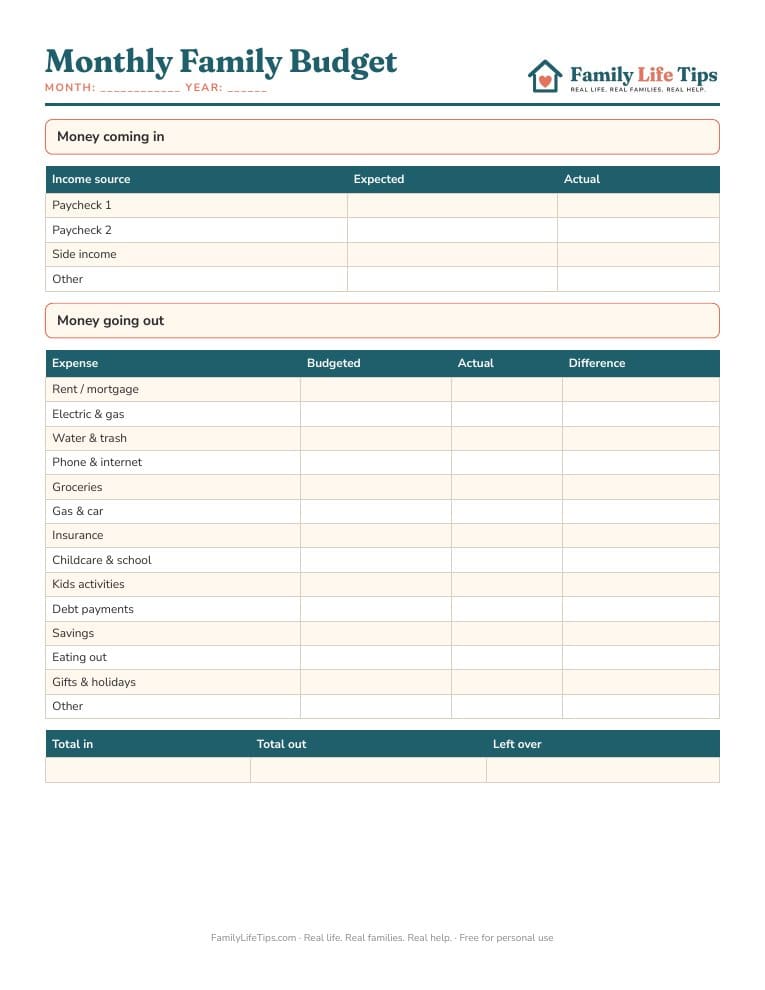
Free printable: Monthly Family Budget Worksheet
One page with income, fixed bills, flexible spending, savings and a monthly check-in box. Print it, fill it in with a pencil and stick it on the fridge.
How do you stick to a budget with kids?
- Use a weekly money date. Same day, same time, 10 minutes. Compare what you spent to what you planned.
- Plan for the predictable surprises. Birthdays, school pictures, field trips and holidays happen every year. Set aside a small amount each month in a “kids extras” line.
- Shop with a list. Most overspending happens in the store. Pair your budget with a weekly meal plan to cut grocery waste.
- Give each adult some no-questions money. A small personal amount prevents arguments over every coffee.
- Expect month one to be messy. Your first budget is a guess. By month three it will match real life much better.

How can kids help with the family budget?
Kids learn about money by watching and doing. Keep it simple and age-appropriate:
| Age | Money job | What they learn |
|---|---|---|
| 3 to 5 | Sort coins, drop savings in a clear jar, choose between two snacks at the store | Money is limited, and saving adds up |
| 6 to 8 | Compare prices on two items, save for a small toy, earn a little for extra jobs | Choices have trade-offs |
| 9 to 12 | Plan a family movie night on a set amount, track their own savings goal | Planning ahead makes money go further |
Many families tie a small allowance to extra jobs beyond everyday chores. Our chore chart guide shows how to set that up.
What should you do if the budget does not balance?
Start with flexible categories: eating out, subscriptions, entertainment and grocery extras. Next, look at bills you can shop around, like phone plans, insurance and internet. If you still come up short, that is important information. It may be time to talk with a nonprofit credit counselor, who can help you look at options for debt and bills.
Keep going with our tips on getting the family home organized and setting family goals that stick, or browse all of our free printables.
What are sinking funds, and why do families need them?
A sinking fund is money you set aside each month for a cost you know is coming but do not pay every month. Instead of being surprised by a $600 car repair or $300 in school fees, you save a little toward it all year.
- Car maintenance and repairs: oil changes, tires, registration
- Kids’ seasonal costs: back-to-school, sports fees, summer camp
- Holidays and birthdays: gifts, parties, travel
- Medical and dental: copays, glasses, prescriptions
- Home: appliance replacement, small repairs
To figure out the monthly amount, estimate the yearly cost and divide by 12. A $720 yearly cost becomes $60 a month. Many banks let you open separate savings “buckets” for free, which makes each fund easy to see.
How do you budget with an irregular income?
If your pay changes from month to month, build the budget around your lowest normal month. Cover fixed bills and basic food first. In higher-income months, fill up savings and sinking funds before adding extra spending. Over time, the goal is to keep about one month of expenses in checking so you can pay this month’s bills with last month’s income.
Sources
- Consumer Financial Protection Bureau: budgeting tools and worksheets
- FDIC Money Smart: financial education resources
- MyMoney.gov: U.S. government financial literacy site
Frequently asked questions
What is the easiest way to make a family budget?
List your monthly take-home pay, write down fixed bills first, then set amounts for flexible spending like groceries and gas. Whatever is left goes to savings or debt. A one-page worksheet keeps it simple enough to stick with.
What is the 50/30/20 budget rule?
It is a common rule of thumb that puts about 50 percent of take-home pay toward needs, 30 percent toward wants and 20 percent toward savings and debt payoff. Treat it as a starting point and adjust it to your real bills.
How often should a family review its budget?
Do a 10-minute check-in once a week and a fuller review once a month. Weekly check-ins catch overspending before the month is gone.
Should kids be involved in the family budget?
Yes, in an age-appropriate way. Young kids can help compare prices or save coins for a goal, and older kids can help plan a family outing within a set amount.
How much should a family keep in an emergency fund?
Many financial educators suggest working toward three to six months of essential expenses. If that feels far off, start with a smaller first goal, like $500 or one month of bills.