

Last updated: November 27, 2026
Quick answer: Start baby proofing before your baby crawls, usually around 6 months. The highest-impact steps are anchoring TVs and furniture to the wall, removing or securing corded window blinds, locking up medicines and cleaning products, clearing small objects that could be choking hazards, and gating stairs. Then get down on your hands and knees and look at each room from your baby’s height.
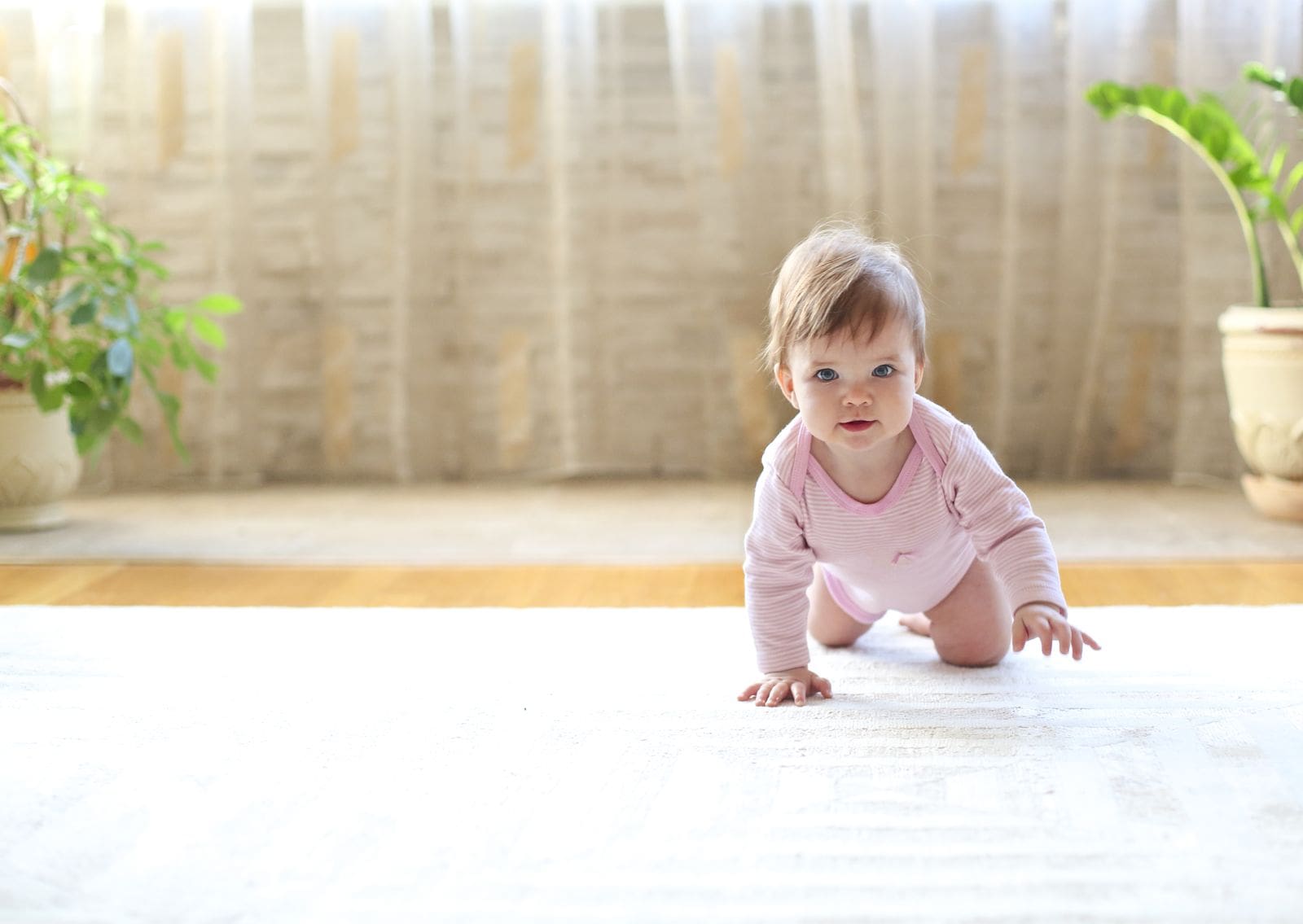
Which baby proofing steps matter most?
1. Anchor TVs and furniture
This is the one many parents skip. According to the U.S. Consumer Product Safety Commission (CPSC), tip-overs usually happen when a child climbs onto, falls against or pulls up on furniture, and nearly 80% of tip-over deaths involve children age 5 and younger (CPSC). Anchor dressers, bookcases and TVs to the wall, and place TVs on a sturdy, low base.
2. Fix window cords
The CPSC recommends replacing corded window coverings with cordless ones. If you cannot, keep cords out of reach and move cribs, beds and furniture away from windows (CPSC).
3. Clear choking hazards
Coins, button batteries, magnets, balloons, small toy parts and pet food are all common choking risks. The AAP suggests checking under furniture and between couch cushions for small items regularly (HealthyChildren.org).
4. Lock up medicines and chemicals
Move cleaning products, laundry pods, medicines and vitamins up high and behind a latch. Save the Poison Help number, 1-800-222-1222, in your phone.
5. Gate the stairs
Use hardware-mounted gates at the top of stairs. Pressure-mounted gates are fine for doorways and the bottom of stairs.

Room-by-room checklist
Nursery
- Crib with a firm, flat mattress and nothing else in it
- Dresser anchored to the wall
- Crib away from windows and cords
- Monitor cords at least 3 feet from the crib
Kitchen
- Latches on cabinets with cleaners or sharp tools
- Pot handles turned inward, stove knob covers if needed
- Range installed with an anti-tip bracket
- Dishwasher pods stored up high
Living room
- TV and bookcases anchored
- Outlet covers or tamper-resistant outlets
- Corner guards on sharp coffee tables
- Remotes and button-battery devices out of reach
Bathroom
- Toilet lock
- Medicines and razors up high
- Water heater set to 120°F or lower to prevent scalds
- Never leave a baby alone in the tub, even for a second
Baby proofing timeline by stage
| Stage | What changes | What to do now |
|---|---|---|
| Before baby arrives | Nothing is mobile yet | Anchor furniture, fix window cords, set the water heater to 120°F or lower, install smoke and carbon monoxide alarms |
| Rolling (about 4 to 6 months) | Babies can roll off beds and changing tables | Change diapers on the floor or keep a hand on baby at all times |
| Crawling (about 6 to 10 months) | Everything at floor level is reachable | Outlet covers, cabinet latches, clear small objects, gate stairs |
| Pulling up and cruising (about 9 to 12 months) | Tabletops and furniture edges are in reach | Corner guards, move hot drinks and cords back from edges, lower the crib mattress |
| Walking and climbing (12 months and up) | Kids climb drawers, chairs and shelves | Double-check anchors, door knob covers, toilet locks, move climbable furniture away from windows |
Every baby moves on their own timeline. Stay one stage ahead.
The crawl test
Get down on your hands and knees and crawl through each room. Look for:
- Cords you can reach or pull
- Anything small enough to fit in a mouth
- Furniture that wobbles when you push or pull it
- Plants (some houseplants are poisonous), pet food and water bowls
- Gaps behind furniture where a baby could get stuck
What to buy (and what you can skip)
| Usually worth it | Often unnecessary |
|---|---|
| Furniture and TV anchor kits | Full-room foam padding |
| Hardware-mounted gate for the top of stairs | Gates on every doorway |
| Cabinet and drawer latches for chemicals and sharp items | Latches on every cabinet in the house |
| Outlet covers or tamper-resistant outlets | Expensive smart monitors as a safety substitute for supervision |
| Cordless window coverings | Bath seats (they do not prevent drowning) |
Shop anchor kits and gates in one place: furniture anchor kits and hardware-mounted stair gates.
Water safety at home
- Never leave a baby or young child alone in or near water, even for a second.
- Empty buckets, kiddie pools and the bathtub right after use.
- Keep bathroom doors closed and use toilet locks.
- If you have a pool, it needs a fence on all four sides with a self-closing, self-latching gate.
Don’t forget visitors’ homes
Grandparents’ homes often have medicines on counters, unanchored furniture and no gates. Bring a few outlet covers and a portable gate, and do a quick crawl test when you arrive.
As an Amazon Associate, FamilyLifeTips.com earns from qualifying purchases.
Frequently asked questions
When should I start baby proofing?
Ideally before your baby starts crawling, around 6 months. Anchoring furniture and fixing window cords can be done before the baby comes home.
What is the most important baby proofing step?
Anchoring TVs and heavy furniture is one of the most important and most often skipped steps, along with removing corded window blinds.
Do I need to baby proof the whole house?
Focus first on the rooms your baby spends time in and on hazards that can cause serious harm: tip-overs, cords, poisons, water, stairs and choking hazards.
What baby proofing products do I really need?
Furniture and TV anchor kits, a hardware-mounted gate for the top of stairs, latches for cabinets with chemicals or sharp items, outlet covers and cordless window coverings.
What is the Poison Help number?
In the United States, the Poison Help line is 1-800-222-1222. Save it in your phone.
Sources
- U.S. Consumer Product Safety Commission, Anchor It!
- U.S. Consumer Product Safety Commission, Home Safety Tips: Young Children
- American Academy of Pediatrics, Choking Prevention