

Last updated: November 27, 2026
Quick answer: A good learning space for kids does not need a whole room. It needs good light, a surface at the right height, kid-reachable storage so they can get out and put away their own things, a cozy spot for reading, and as few screens and distractions as possible. A corner of the kitchen or living room works fine.
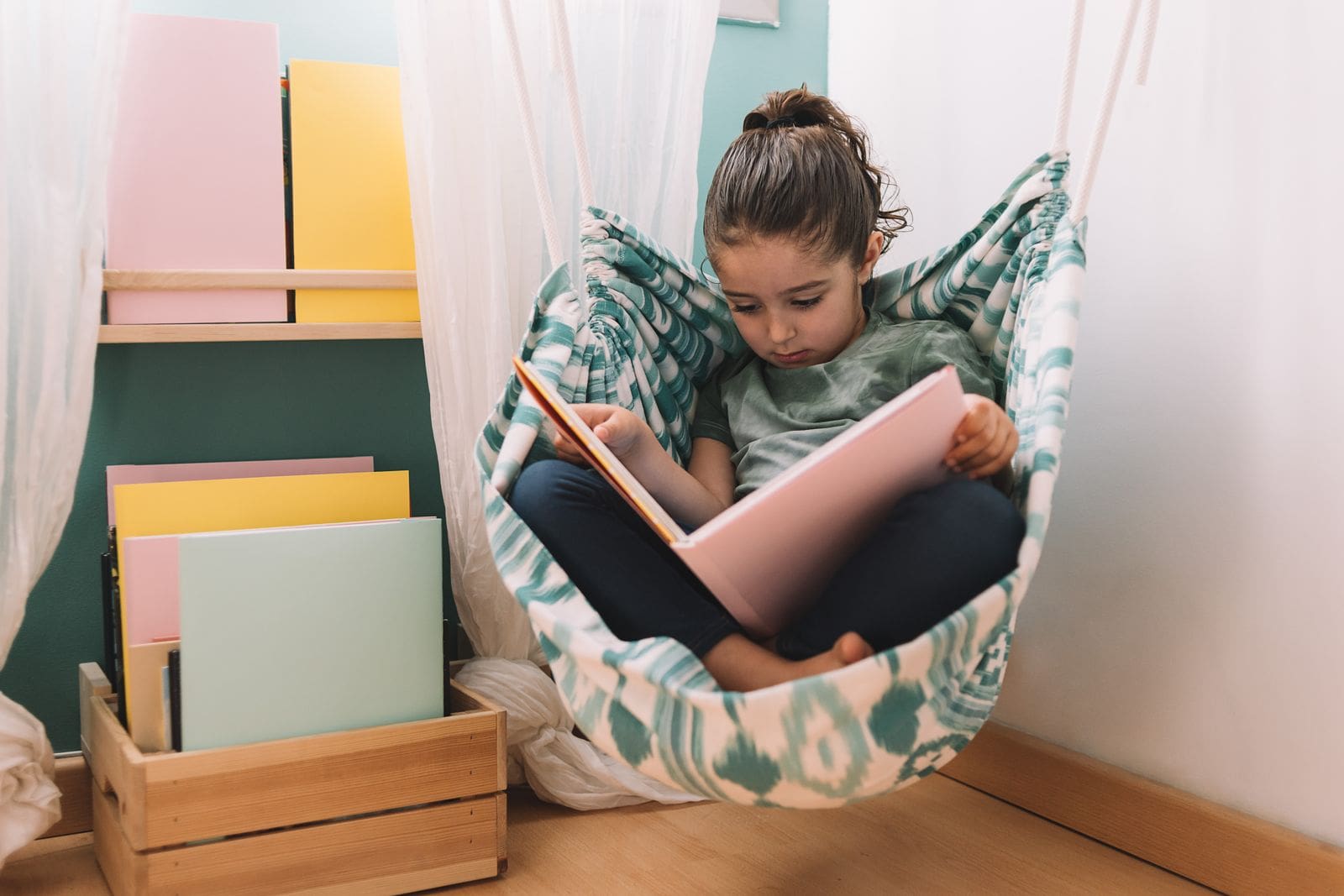
What does a good kids’ learning space need?
- Light. Natural light if possible, plus a desk lamp for evenings.
- The right height. Feet flat on the floor or a footrest, elbows near table height.
- Reachable storage. Low shelves and open bins with picture labels for little ones.
- A reading spot. A floor cushion, beanbag or small chair next to a book basket.
- Simple supplies. Crayons, pencils, paper, scissors, glue and a few open-ended toys.
Set it up by age
Toddlers and preschoolers
Think “play station,” not desk. A low table, a bin of blocks, puzzles and art supplies, and a basket of board books. The American Academy of Pediatrics says the best toys for young children are simple, hands-on ones that encourage play with a caregiver, like blocks, puzzles, pretend-play items and art supplies (HealthyChildren.org).
School-age kids
Add a proper homework surface, a pencil cup, a calendar for assignments and a bulletin board for schedules. Keep the reading nook. Older kids still need a comfortable place to read for fun.
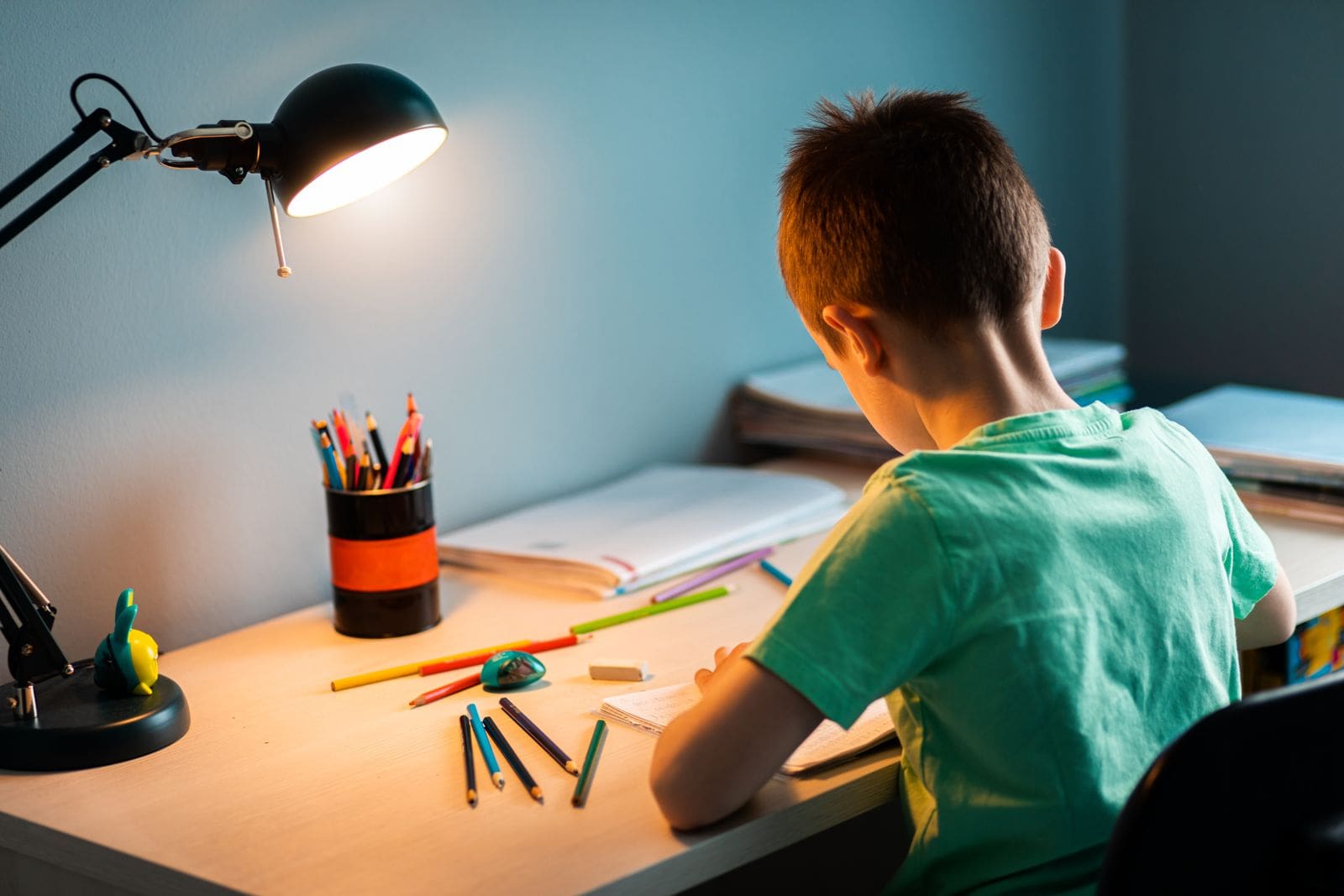
How do you cut down on distractions?
- Face the desk toward a wall, not the TV.
- Keep tablets and phones in another room during homework unless they are needed.
- Put only the current project on the table. Everything else goes back on the shelf.
- Use a timer for focused work and short breaks.
Budget ideas
- Use a kitchen-table “homework caddy” you carry out each afternoon.
- Turn a closet into a reading nook with a cushion and string lights.
- Rotate toys and books every couple of weeks instead of buying new ones.
- Hang a dry-erase calendar like this family wall calendar so everyone sees what is coming up.
Learning space checklist
| Item | Why it helps |
|---|---|
| Desk lamp with warm light | Reduces eye strain for evening homework and reading |
| Chair and table at the right height | Feet flat, elbows near table height keeps kids comfortable longer |
| Low open shelves | Kids can get out and put away their own things |
| Bins with picture labels | Pre-readers know where things go |
| Book basket or front-facing shelf | Kids pick books by their covers |
| Floor cushion or beanbag | A cozy reading spot makes reading feel like a treat |
| Wall calendar or whiteboard | Keeps assignments and activities visible |
| Pencil cup and supply caddy | Everything needed in one grab |
Small-space ideas
- Wall-mounted fold-down desk in a hallway or bedroom corner.
- Rolling cart that parks next to the kitchen table at homework time.
- Under-bed bins for rotating toys and art supplies.
- Over-the-door organizer for markers, glue sticks and scissors.
- A window seat or cushion corner as the reading nook.
Homework routine that works
- Snack first. Hungry kids cannot focus.
- Same time, same place most days.
- Hardest task first, while energy is highest.
- Short focus blocks with movement breaks. Younger kids may need a break every 10 to 15 minutes.
- Pack up together. Finished work goes straight into the backpack by the door.
Make it theirs
Let your child help pick a lamp, a bin color or a poster. Kids use spaces they helped create. Display their artwork and finished projects on a corkboard or string line to celebrate their work.
Keep screens in check
The AAP advises families to limit video and computer game use by young children and to favor hands-on play (HealthyChildren.org). If a device is needed for schoolwork, keep it in the shared space where you can see it, and put it away when the work is done.
Frequently asked questions
Where should a homework space be?
Anywhere with good light and few distractions. For younger kids, a spot near a parent, like the kitchen table, often works better than a desk in a bedroom.
What toys help children learn?
The American Academy of Pediatrics recommends simple, hands-on toys like blocks, puzzles, pretend-play items and art supplies, especially when parents play along.
How do I keep a kids’ learning area tidy?
Give everything a labeled home at kid height, keep fewer items out at once, and build a two-minute clean-up into the end of each session.
How do I set up a homework station in a small house?
Use a rolling cart or supply caddy that parks next to the kitchen table, a wall-mounted fold-down desk, or an over-the-door organizer for supplies.
How long should young kids do homework at a time?
Short focus blocks work best. Many younger children need a quick movement break every 10 to 15 minutes.
Sources
- American Academy of Pediatrics, Ignore the Flashing Screens: The Best Toys Go Back to the Basics
As an Amazon Associate, FamilyLifeTips.com earns from qualifying purchases.