

Last updated: November 27, 2026
Quick answer: Toddlers can help in the kitchen from about 18 months with simple, no-heat jobs like washing produce, tearing lettuce, stirring cold ingredients and pouring from a small cup. Keep them on a stable step stool away from the stove and knives, give them one job at a time, and expect a mess. The goal is getting them comfortable with food, not a perfect meal.
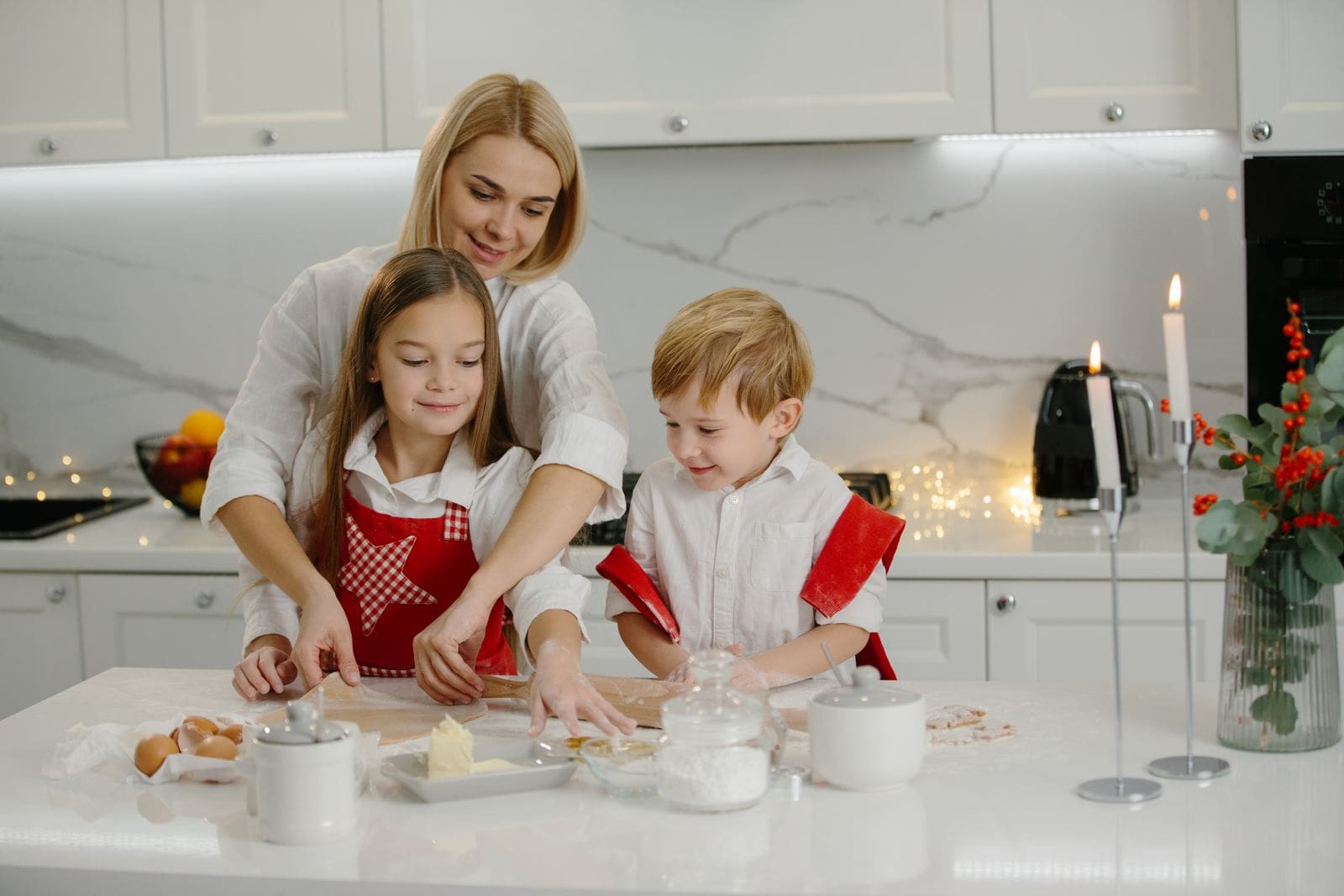
Why cook with a toddler at all?
Because kids who touch, smell and help make food are more willing to taste it. Pediatricians at the American Academy of Pediatrics (AAP) note that it can take a child 15 to 20 tries to like a new food, and that showing interest in cooking helps children get curious about what is on the plate (HealthyChildren.org). Cooking together turns “try a bite” into “try the thing you made.”
It also builds real skills: counting scoops, naming colors, following steps and waiting their turn.
What kitchen jobs can toddlers do by age?
18 months to 2 years
- Wash fruits and vegetables in a bowl of water
- Tear lettuce or herbs
- Carry unbreakable items to the table
- Drop pre-measured ingredients into a bowl
Age 2 to 3
- Stir cold batters and salads
- Pour from a small measuring cup
- Spread soft butter or hummus with a dull spreader
- Mash bananas or avocado with a fork
Age 3 to 5
- Crack eggs into a separate bowl (fish out the shells together)
- Measure dry ingredients with level scoops
- Knead dough and press cookie cutters
- Cut soft foods like bananas or cooked pasta with a kid-safe nylon knife, with you right beside them
How do you keep toddlers safe in the kitchen?
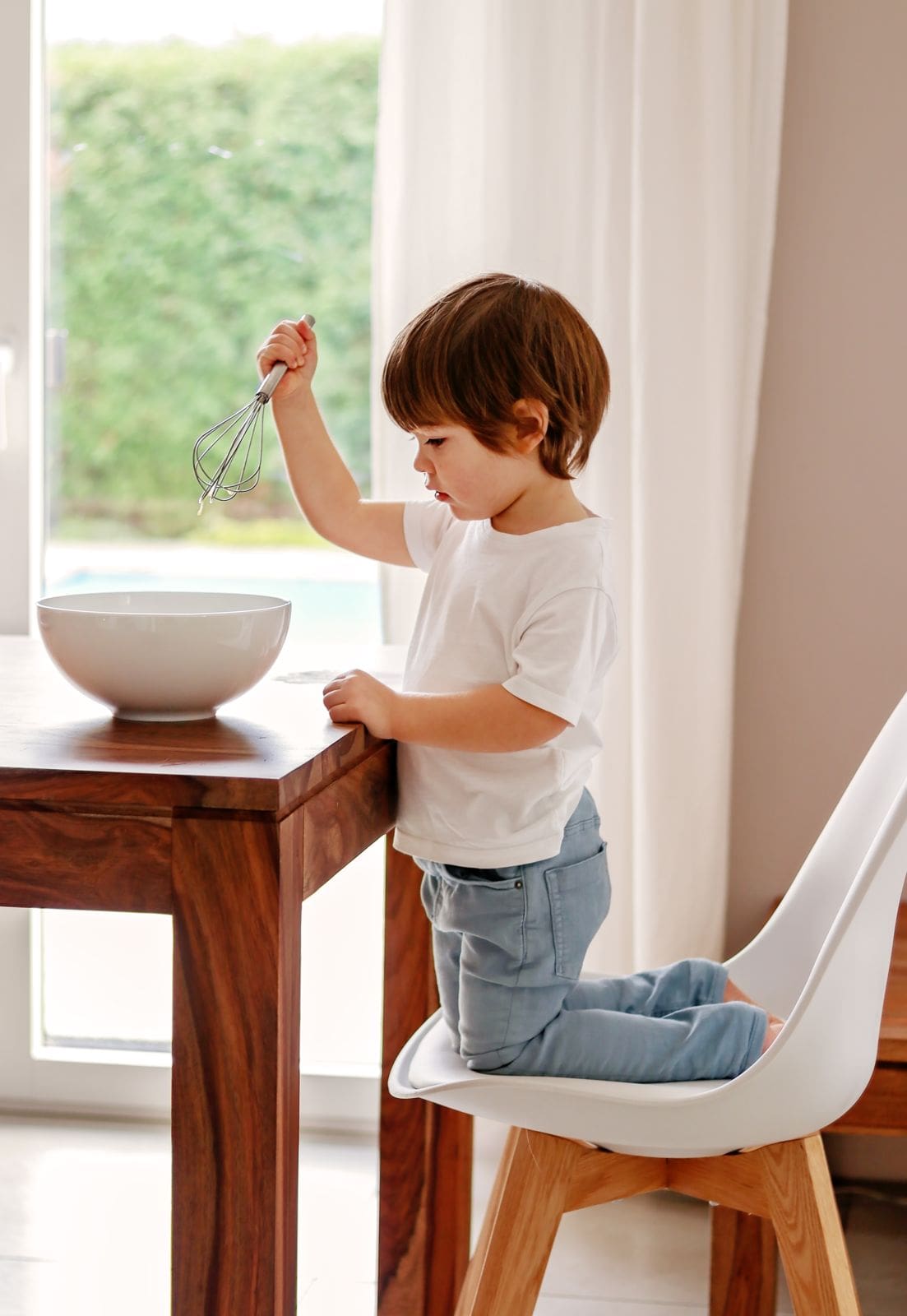
- Set one workstation. A sturdy step stool or learning tower at the counter, away from the stove.
- Keep heat and blades on your side. You handle the oven, stovetop, knives and appliances.
- Turn pot handles inward and keep hot liquids at the back of the stove.
- Watch the tasting. Raw batter with eggs or flour is not for snacking.
- Mind choking hazards. The AAP advises keeping high-risk foods like whole grapes, nuts, popcorn and chunks of hot dog away from children under 4, or cutting them into small, non-round pieces (HealthyChildren.org).
Five easy first recipes to make together
- Yogurt parfait cups. They spoon yogurt and sprinkle berries (halved or quartered for little ones).
- Banana “sushi.” Spread nut or seed butter on a tortilla, roll it around a banana, and you slice.
- Mini pizzas. English muffins, sauce and cheese. They decorate, you bake.
- Muffin-tin eggs. They whisk and add chopped spinach, you pour and bake.
- Snack mix. Older preschoolers measure cereal, pretzels and dried fruit into bags. Skip whole nuts for kids under 4.
Tips that make it less chaotic
- Prep and measure everything before you invite them in.
- Give each child their own bowl and spoon.
- Pick a time when nobody is starving or overtired. Weekend mornings work well.
- Put a towel or splat mat under the stool.
- Let them help clean up. Wiping the counter is a job too.
Kitchen jobs by age at a glance
| Age | Good jobs | Adult handles |
|---|---|---|
| 18 months to 2 | Washing produce, tearing greens, dropping in pre-measured ingredients | Everything with heat, blades or glass |
| 2 to 3 | Stirring, pouring, mashing, spreading, sprinkling toppings | Measuring, cracking eggs, oven and stove |
| 3 to 5 | Measuring, cracking eggs, kneading, cookie cutters, soft-food cutting with a nylon knife | Sharp knives, appliances, hot pans |
How to set up a kid-friendly cooking station
- Pick a spot away from the stove. The end of a counter or the kitchen table works well.
- Use a stable step stool or learning tower so your child stands at counter height without climbing.
- Lay out a small kit: a plastic mixing bowl, a silicone spatula, measuring cups, a whisk, a nylon kid knife for older preschoolers, and an apron.
- Pre-measure ingredients into small bowls so the fun part is dumping and stirring, not waiting.
- Put a towel or splat mat underneath. Spills are part of the plan.
Common mistakes to avoid
- Starting with a complicated recipe. Begin with three or four steps your child can do.
- Cooking when everyone is hungry. A hungry toddler and a hot stove are a bad mix. Try weekend mornings or after a snack.
- Fixing their work in front of them. Lumpy muffins taste fine. Let them own it.
- Letting kids taste raw batter or dough. Raw eggs and raw flour are not safe to eat. Give them a tasting bowl of safe ingredients instead.
- Forgetting hand washing. Make it the first step every time, with soap and warm water.
Turning cooking into learning
- Math: count scoops, compare “more” and “less,” cut a pizza into halves and quarters.
- Language: name ingredients, colors and textures. “Is the dough sticky or smooth?”
- Science: watch butter melt, bread rise and pasta soften.
- Patience: waiting for the oven timer is a skill too.
A simple first recipe: banana oat mini muffins
A great starter recipe because toddlers can do most of the steps. Makes about 24 mini muffins.
- 2 ripe bananas
- 2 eggs
- 1 cup quick oats
- 1/2 cup whole-wheat flour
- 1 teaspoon baking powder
- 1/2 teaspoon cinnamon
- 1/4 cup milk
- You: heat the oven to 350°F and grease a mini muffin pan.
- Child: mash the bananas in a bowl with a fork.
- You: crack the eggs into a separate cup. Child: pour them in and stir.
- Child: dump in the pre-measured oats, flour, baking powder, cinnamon and milk, then stir until combined.
- You: spoon batter into the pan and bake 12 to 15 minutes, until a toothpick comes out clean. Cool before serving.
Frequently asked questions
What age can a child start helping in the kitchen?
Most toddlers can start simple, no-heat jobs like washing produce and tearing lettuce around 18 months to 2 years, with an adult right there.
Should toddlers use knives?
Not sharp ones. Around age 3 to 5, some children can cut very soft foods with a nylon kid knife under close supervision. You handle every real knife.
What if my toddler only wants to eat the ingredients?
That is normal. Set aside a small “tasting bowl” of safe ingredients like cucumber or cheese so they can snack without eating raw batter.
Is it safe for toddlers to taste raw cookie dough or batter?
No. Raw eggs and raw flour can carry germs that make people sick. Give toddlers a small bowl of safe ingredients to taste instead.
What equipment do I need to cook with a toddler?
A stable step stool or learning tower, a plastic mixing bowl, measuring cups, a silicone spatula, a whisk and an apron. Older preschoolers can add a nylon kid knife.
Sources
- American Academy of Pediatrics, How do I help my picky eater try more foods?
- American Academy of Pediatrics, Choking Prevention