

Last updated: November 27, 2026
Quick answer: Start small: eat together a few times a week, fill half of everyone’s plate with fruits and vegetables, plan snacks instead of grazing, swap sugary drinks for water, and get the kids involved in cooking. Small, repeated habits beat strict rules, and children copy what the adults around them do.
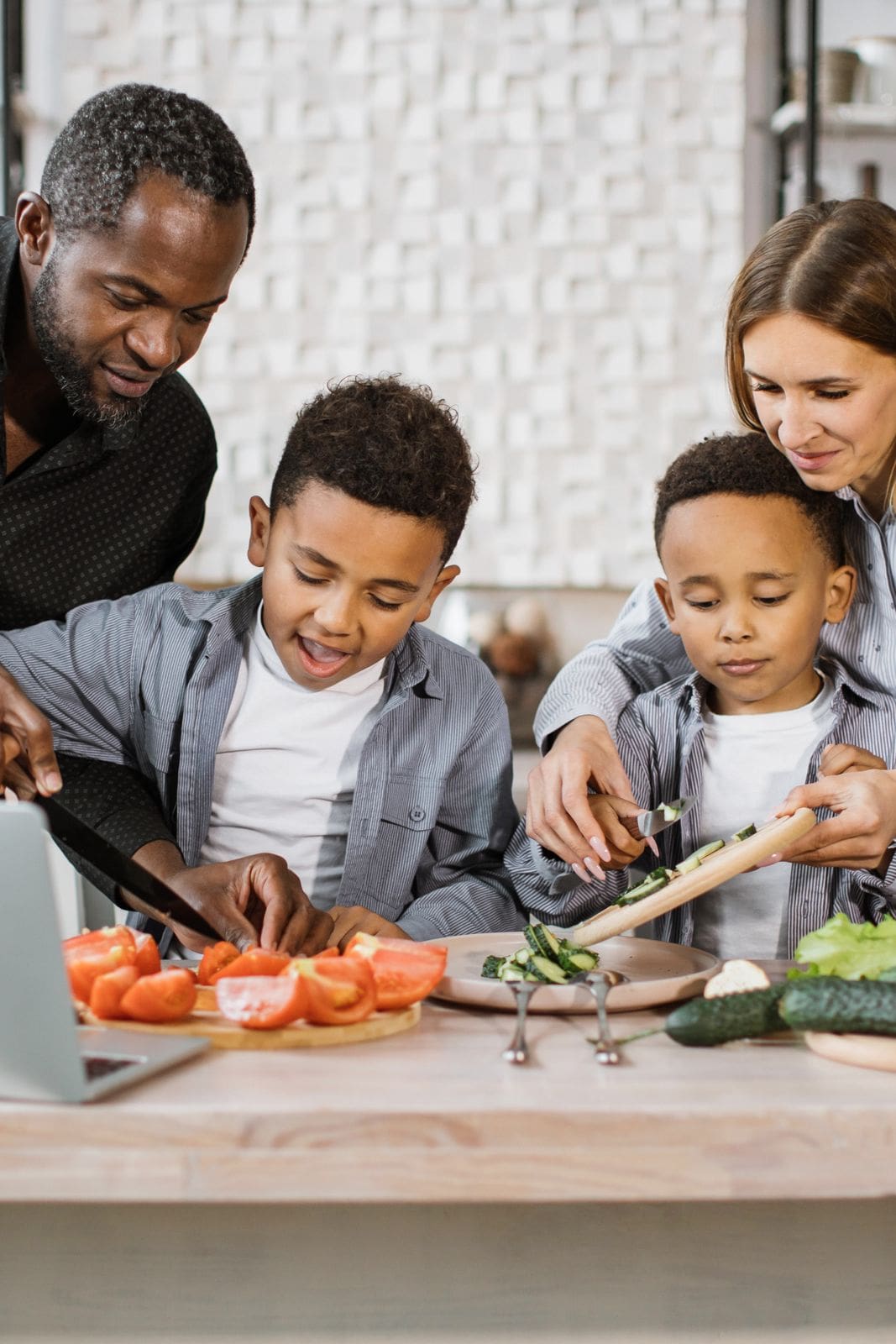
Step 1: Eat together more often
You do not need a perfect dinner every night. The American Academy of Pediatrics encourages families to commit to eating meals together at least two to three times per week (AAP). Breakfast counts. So does a picnic on the living room floor.
- Put phones away and turn the TV off.
- Talk about something other than food.
- Let the youngest set the table.
Step 2: Use the half-plate rule
The USDA’s MyPlate model is simple enough for kids to understand: make half the plate fruits and vegetables, and split the rest between grains and protein, with dairy on the side (MyPlate.gov). You do not have to measure. Just eyeball it.
Step 3: Plan snacks instead of grazing
Snacking all day leaves kids too full to try anything new at meals. Set two or three snack times and treat them like mini meals: fruit and cheese, yogurt and granola, veggies and hummus. Keep a “yes shelf” in the fridge with grab-and-go options kids are allowed to pick from.
Step 4: Make water the default drink
- Give every family member their own reusable bottle. Kids drink more from a bottle they picked out. The Owala FreeSip Kids is a popular leak-resistant choice.
- Add fruit slices or berries for flavor.
- Save juice and soda for special occasions.
Step 5: Get kids in the kitchen
Children are more willing to taste food they helped make. Even toddlers can wash produce and stir. Older kids can pick one dinner a week and help shop for it. See our guide to cooking with toddlers for jobs by age.
What should you avoid?
- Labeling foods “good” and “bad.” It can make treats feel more exciting and meals feel like a test.
- Using dessert as a reward. It teaches kids that vegetables are a chore.
- Changing everything at once. Pick one step, stick with it for two weeks, then add another.
A sample week using all five steps
| Day | One small habit |
|---|---|
| Sunday | Plan five dinners together and write the grocery list |
| Monday | Family dinner with phones in a basket |
| Tuesday | Kids pick and wash the vegetable |
| Wednesday | Water with dinner, fruit slices added |
| Thursday | Try one new food, no pressure to finish it |
| Friday | Build-your-own pizza with a vegetable topping bar |
| Saturday | Family breakfast together |
What does the half-plate rule look like?
- Breakfast: scrambled eggs, whole-grain toast, berries and a glass of milk
- Lunch: turkey and cheese wrap, cucumber slices, apple slices
- Dinner: chicken, brown rice, roasted broccoli and carrots
- Snack: yogurt with banana
Kids’ portions are smaller than adults’. Let them serve themselves from family-style bowls and trust their hunger cues.
Smart grocery swaps
- White bread to whole-grain bread
- Sugary cereal to oatmeal or lower-sugar cereal with fruit
- Juice boxes to water bottles with fruit slices
- Chips to popcorn for older kids or whole-grain crackers for younger kids
- Flavored yogurt to plain yogurt with a drizzle of honey (honey is only for children over 1)
How do you keep it going when life gets busy?
- Lower the bar on busy nights. Frozen vegetables count. Rotisserie chicken counts.
- Stock the “yes shelf” so grab-and-go snacks are healthy by default.
- Model it. Kids notice what adults eat and drink.
- Celebrate effort, not plates. “You tried the peppers!” goes further than “clean your plate.”
Frequently asked questions
How can I get my family to eat healthier without a fight?
Make one small change at a time, keep familiar foods on the table, and let kids help choose and cook. Avoid pressure, bribes and food labels.
How often should families eat together?
The American Academy of Pediatrics encourages family meals at least two to three times a week. Any meal counts, including breakfast.
What is the easiest healthy swap?
Making water the default drink is one of the simplest changes most families can make right away.
What does a healthy plate look like for kids?
Half fruits and vegetables, with the rest split between grains and protein and dairy on the side, based on the USDA MyPlate model.
Can toddlers have honey?
Not before age 1. Honey should not be given to babies under 12 months.
Sources
- American Academy of Pediatrics, How do I help my picky eater try more foods?
- U.S. Department of Agriculture, MyPlate
As an Amazon Associate, FamilyLifeTips.com earns from qualifying purchases.