

Last updated: November 27, 2026
Quick answer: Most toddlers and preschoolers do well with three meals and two or three planned snacks a day, spaced about two to three hours apart. A predictable schedule means kids come to the table hungry, which makes them more likely to try new foods. Your job is deciding what is served and when; their job is deciding how much to eat.
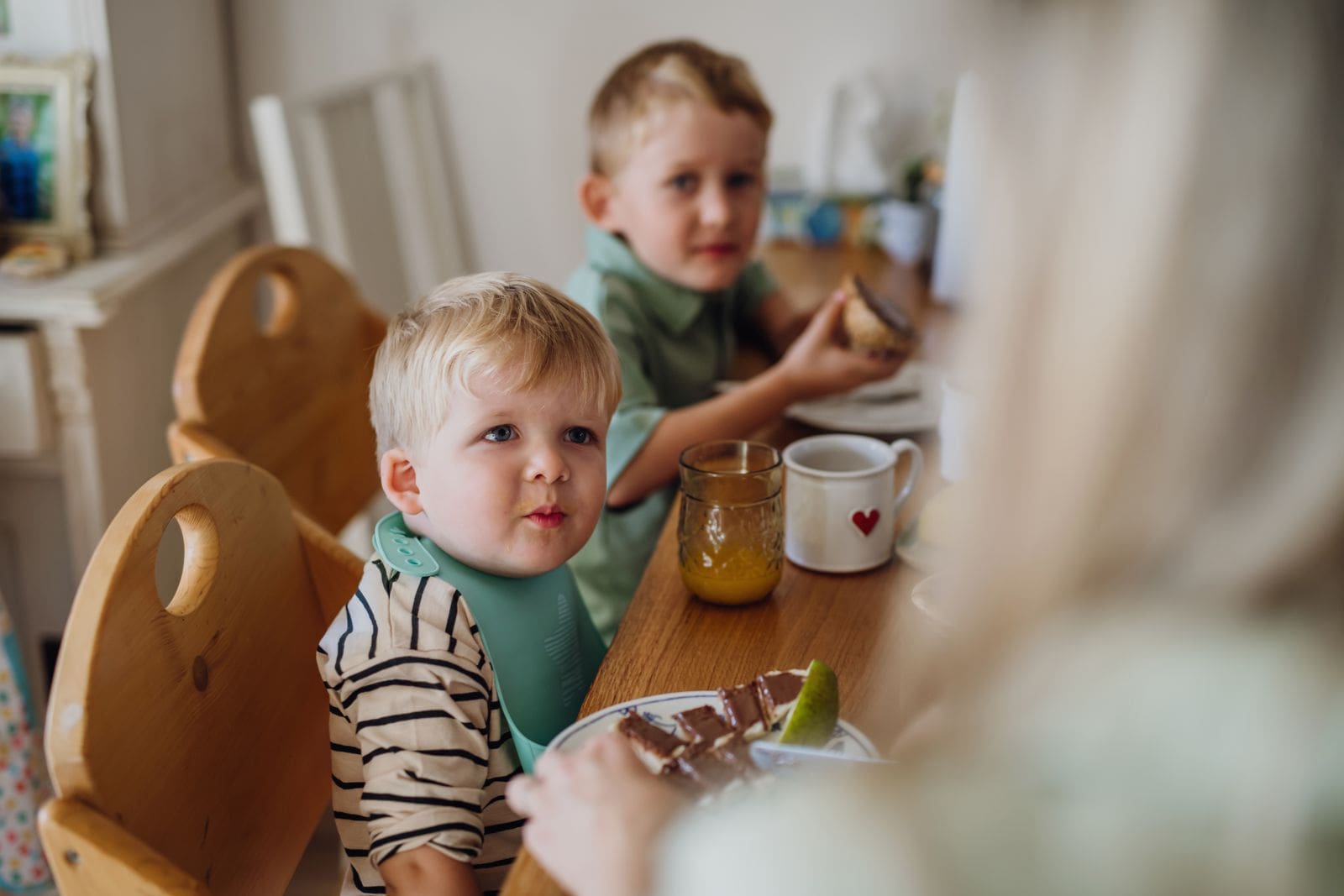
Why does a schedule help young kids eat better?
After the fast growth of the first year, a toddler’s growth rate and appetite slow down, so picky eating is often the norm (AAP, HealthyChildren.org). The AAP also notes that scheduled meals and limited snacking help make sure a child is hungry when a new food shows up. Constant grazing does the opposite: a child who nibbled crackers all morning has no reason to try the broccoli at lunch.
What does a sample day look like?
Shift the times to fit your family. The spacing is what matters.
- 7:00 a.m. Breakfast
- 9:30 a.m. Morning snack
- 12:00 p.m. Lunch
- 3:00 p.m. Afternoon snack
- 5:30 to 6:00 p.m. Dinner
- Optional: a small bedtime snack if dinner was early
What makes a good snack for kids under 6?
Think of snacks as mini meals, not treats. Pair two food groups when you can:
- Apple slices (thin for younger kids) and cheese
- Yogurt and berries
- Whole-grain crackers and hummus
- Banana and a smear of nut or seed butter
- Hard-boiled egg and soft cooked veggies
For children under 4, the AAP advises keeping round, firm foods like whole grapes, nuts, popcorn and hot dog chunks off the menu, or cutting them into small, non-round pieces (HealthyChildren.org).
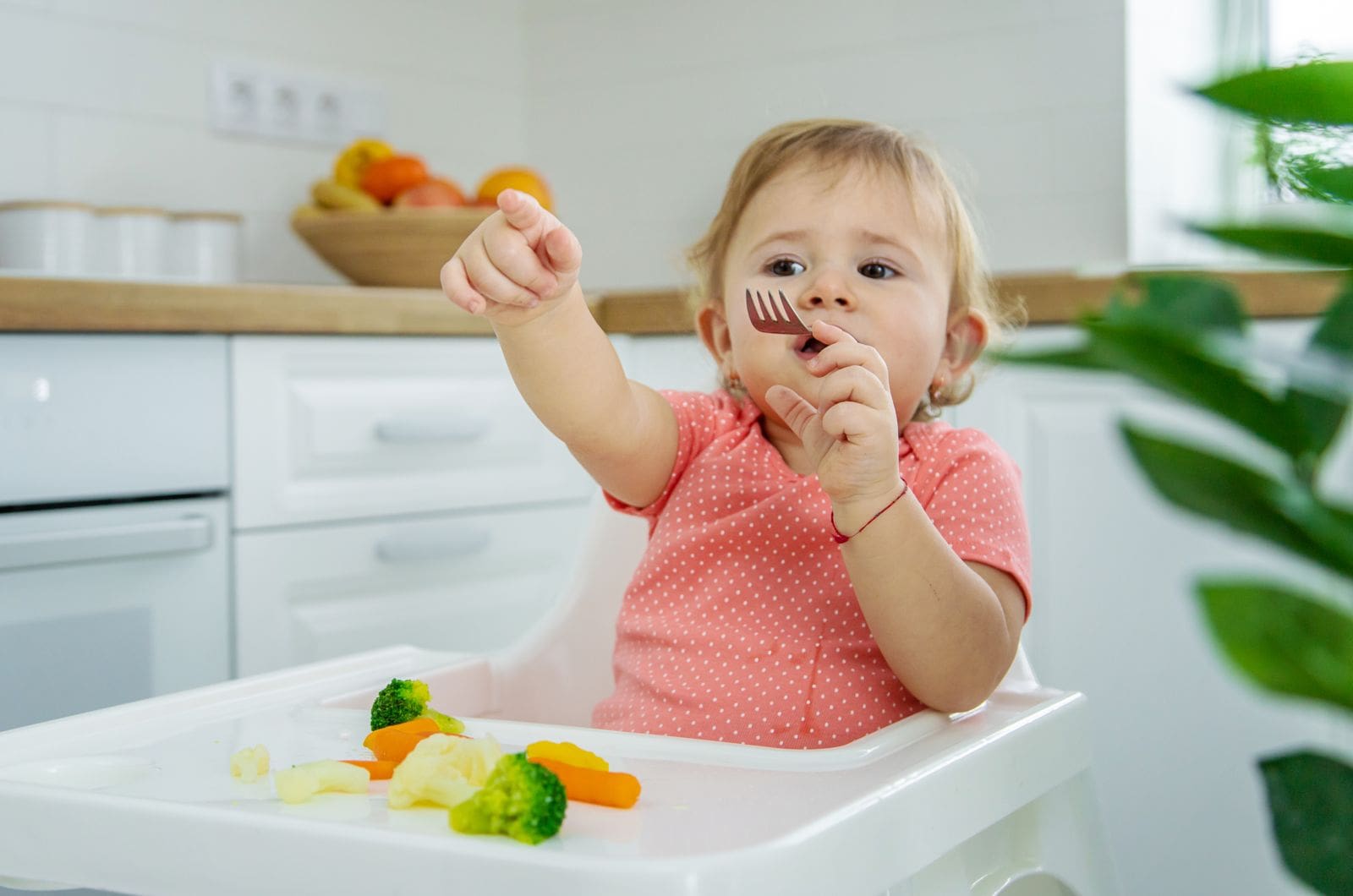
How do you handle picky days?
- Serve one “safe” food they usually eat alongside anything new.
- Keep offering. According to the AAP, it can take 10 or more tastes before a toddler accepts a new food.
- Skip the bribes. “Two more bites for dessert” teaches kids that vegetables are a chore and dessert is the prize.
- Eat together. The AAP encourages family meals at least two to three times a week. Kids copy what they see.
- Keep meals short. Twenty to thirty minutes is plenty. If they are done, they are done until the next planned snack.
What about milk and juice?
Drinks can fill small stomachs fast. Offer water between meals and serve milk with meals so it does not replace food. Ask your pediatrician how much milk is right for your child’s age.
Sample schedules by age
| Time | Ages 1 to 2 | Ages 3 to 5 |
|---|---|---|
| 7:00 a.m. | Breakfast | Breakfast |
| 9:30 a.m. | Snack | Snack (or at preschool) |
| 11:30 a.m. to 12:00 p.m. | Lunch, then nap | Lunch |
| 2:30 to 3:00 p.m. | Snack after nap | Snack |
| 5:30 p.m. | Dinner | Dinner |
| 7:00 p.m. | Optional small snack, then bed | Optional small snack, then bed |
These are examples, not rules. Daycare, school and work schedules all shift things. Keep the spacing roughly the same and the routine will still work.
How to switch from grazing to a schedule
- Pick your times and write them down where everyone can see them.
- Close the kitchen between eating times. Offer water if your child asks for food.
- Expect a few cranky days. Most kids adjust within a week once they learn food is coming.
- Serve snacks at the table, not in the car or in front of the TV, when you can.
- Stay calm about leftovers. Small appetites at one meal often balance out at the next.
Snack ideas by food group
- Fruit: banana, berries (cut for under 4), thin apple slices, orange segments, unsweetened applesauce
- Vegetables: cucumber rounds, steamed carrot sticks, snap peas for older kids, roasted sweet potato bites
- Protein: cheese cubes, hard-boiled egg, hummus, yogurt, beans
- Grains: whole-grain crackers, mini muffins, toast strips, oatmeal
Handling daycare, school and busy days
- Ask for the daycare menu so you can balance dinner with what they ate during the day.
- Pack a “bridge snack” for pickup. Kids are often starving at 3:30.
- Use a divided lunch box like the Bentgo Kids to pack balanced snacks fast.
- On sports or activity nights, serve a bigger afternoon snack and a lighter, earlier dinner.
When to talk to your pediatrician
Picky phases are common, but check in with your child’s doctor if your child is losing weight, gagging or vomiting with many foods, eats only a handful of foods, or if mealtimes cause constant distress. They can check growth and refer you to a feeding specialist if needed.
Frequently asked questions
How many snacks should a toddler have a day?
Most toddlers do well with two or three planned snacks between three meals, spaced about two to three hours apart.
Is it okay if my child skips a meal?
An occasional skipped meal is common for young kids, whose appetites swing from day to day. Offer the next planned meal or snack as usual. If you are worried about growth or weight, talk with your pediatrician.
Should I make a separate meal for my picky eater?
Try to serve one family meal and include at least one food your child usually eats. Cooking a separate meal every night tends to reinforce picky eating.
How far apart should meals and snacks be for toddlers?
About two to three hours apart works for most toddlers and preschoolers, with nothing but water in between.
Should toddlers eat a snack before bed?
A small bedtime snack can be fine if dinner was early. Keep it simple, like yogurt, fruit or toast, and brush teeth afterward.
Sources
- American Academy of Pediatrics, 10 Tips for Parents of Picky Eaters
- American Academy of Pediatrics, How do I help my picky eater try more foods?
- American Academy of Pediatrics, Choking Prevention
As an Amazon Associate, FamilyLifeTips.com earns from qualifying purchases.